

Most business owners build their business first and hope a good life eventually follows. The smarter approach is the opposite: design the life you want, then build the business to deliver it.
A woman in northern Queensland had everything she had been working toward. A holiday house on a Queensland island. A boat. Cattle properties. Assets in the bank. The lifestyle she had dreamed about was already there, fully formed, right in front of her.
And she was completely stressed out of her mind.
She was grinding through ridiculous hours, pushing harder every week, carrying a weight of pressure she had put on herself for years. She had the dream. She just could not see it.
It was when Peter Spinda sat down with her and ran a simple exercise, drawn from Tim Ferriss’s book The 4-Hour Work Week, that something shifted. They worked through the real maths: what the life she actually wanted would cost, and what she already had. The answer was clear. She had arrived. She had been there for a while.
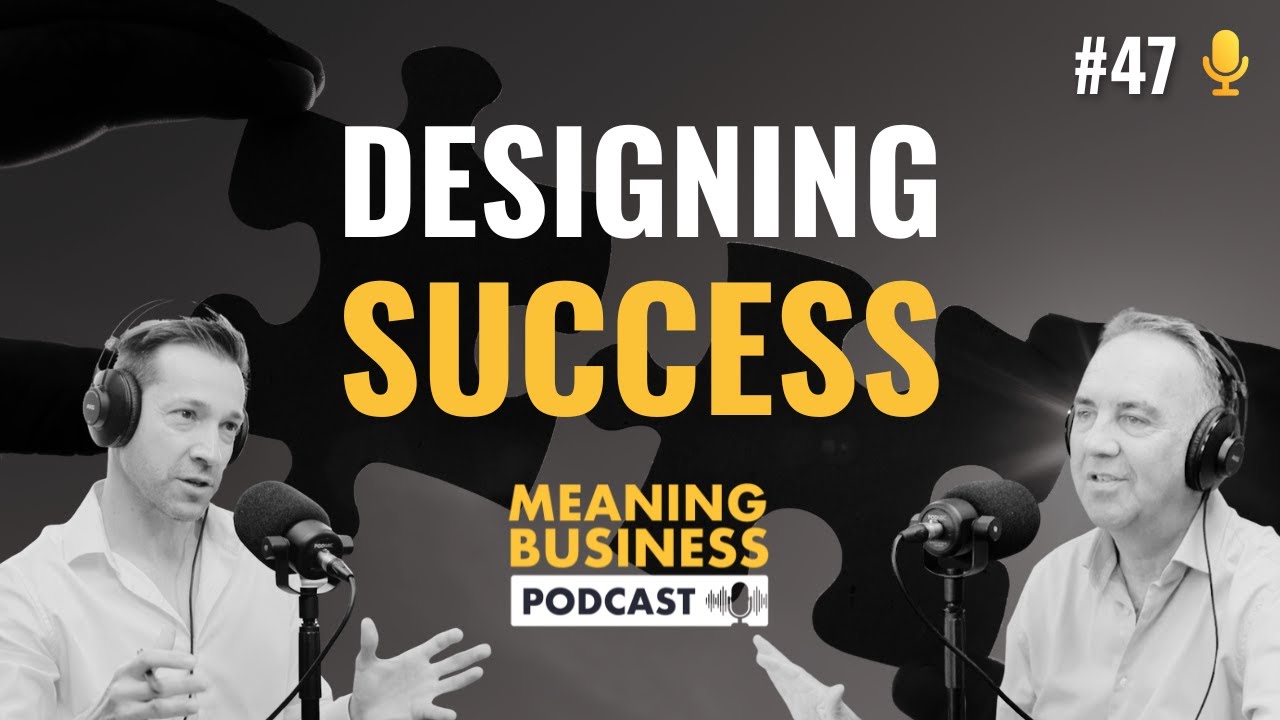
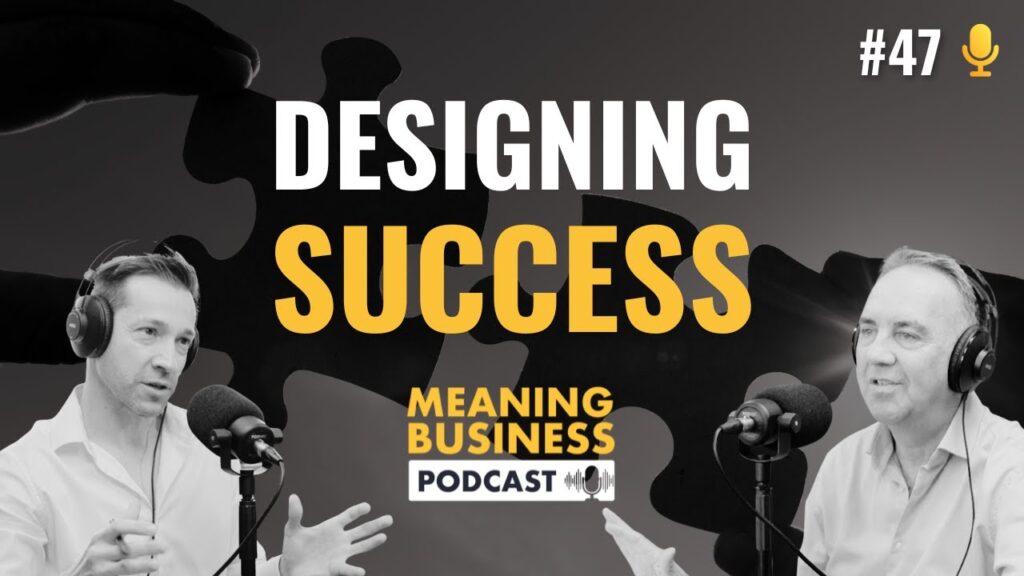
In this episode of the Meaning Business Podcast, Peter and Bruce unpack one of the most underrated conversations in business: designing your future on purpose. Not drifting toward it. Not hoping the business eventually pays off in a life worth living. Designing it deliberately, from the beginning, with the end in mind. This episode is one of the best practical frameworks they have shared for building a business that actually works for you.
The Tim Ferriss Exercise That Changes the Way You See Your Business
Pete opens the conversation by pointing to an exercise in The 4-Hour Work Week that he has run with many clients over the years. It is deceptively simple.
The exercise asks you to get clear on two things: what you truly want from life, and what your current financial reality actually looks like. Then it brings the two together.
What Ferriss argues, and what Pete has seen in practice, is that there is almost always a mismatch. Business owners convince themselves they need far more than they actually do. More money, a bigger house, another car. But when you sit down and do the real maths, when you work out what the life you want would genuinely cost, the number is almost always smaller than you assumed.
Many people, like the Queensland client, find they are already there.
The question is not “how much do I need?” The question is “what do I actually want, and what does that cost?”
Once you answer that question honestly, everything else in the business starts to look different.
You Might Already Be Living Your Dream Life and Not Know It
This is one of the most striking points in the episode. A significant number of business owners are already living, or very close to living, the life they want. They just have not stopped long enough to see it.
When Pete ran the exercise with his Queensland client, she realised that the island house, the boat, the cattle properties, and the assets she had built already represented the lifestyle she had been working toward. The stress was not coming from a shortfall in what she had. It was coming from the pressure she kept putting on herself to push further, without ever pausing to acknowledge she had already crossed the line.
Once that realisation landed, things changed fast. Her stress dropped. She started enjoying her business instead of enduring it. She brought in a general manager. She took more holidays. She built a team that could run the business without her. Today she has a successful operation and a comfortable life, not because she worked harder, but because she finally understood what she already had.
That shift from grinding toward an invisible finish line to recognising you are already on track is what purposeful design makes possible. It is not always about doing more. Sometimes it is about seeing clearly.
Start With the Dream, Then Reverse Engineer Everything Else
Peter and Bruce come back to the same principle throughout this conversation: start with the end in mind, then work backwards.
Peter is specific about his own vision. His number one driver is being present for his kids. Football training, school concerts, homework sessions, he wants to be at all of it. Every business decision he makes gets filtered through a simple question: how does this affect that?
For Bruce, it is a clean and simple life. He describes what he calls a “Porsche lifestyle”: minimal house, no clutter, a neat garage, nothing unnecessary. That image is his visual anchor. The thing he comes back to when he is deciding how to operate.
Different visions. Same method. Define what you want. Work out what it costs. Then ask: what does my business need to do to get me there?
The answer to that question becomes your business plan.
How to Put the Maths Together
Bruce walks through an example in the episode. Say you want to retire at 50, travel freely, and buy into a couple of managed businesses. You work out that you need $300,000 a year in passive income to do it without eroding your capital. Now you have a target.
The next question is: when you sell your business and take the capital, what does that money do? Which assets generate income? Properties? Managed businesses? How do you structure it so the cash works for you once you step back?
This is the design conversation most business owners never have. They think about the sale, but they do not think about what comes after. Designing the post-business picture is just as important as designing the business itself.
And your why can change along the way. Bruce mentions he might swap his Formula 1 world tour for a caravan trip around Australia and that is completely fine. When the vision shifts, you reset the target and reverse engineer from the new one. There is no failure in updating the plan. The only mistake is having no plan at all.
What Your Business Actually Gives You: Three Things Worth Designing Around
Peter makes a point that often gets skipped in exit conversations. Your business gives you three things:
- A weekly wage or income
- Profit
- The capital event when you sell
Most owners focus on the third one. But they worry that selling means losing the first two. That worry is understandable, and it is also a design problem.
If you sell and hold the capital, you need a new plan for that money. How does it generate income? What replaces the cash flow the business was producing? That is part of the design, not a problem to solve after the fact.
Thinking through all three layers clearly, not just the exit, is what separates purposeful business owners from those who are simply grinding and hoping something good happens at the end.
How to Make Business a Game (and Why It Works)
One of the most energising parts of this episode is the conversation around making business genuinely fun. Not in a fluffy way. In a practical, targets-and-scoreboards way.
Peter gives a vivid example. His family goal is to get tickets to the Football World Cup in the US, specifically the semi-final and the final. The cost is a minimum of $50,000. He sat down with his family, got the kids involved, set the target, and then worked backwards into business numbers. How much revenue does the business need to generate? What does that mean week by week? What does it mean for the decisions he makes right now?
Those questions now have a face on them. They are not abstract revenue targets on a spreadsheet. They are World Cup tickets for Alex, who loves football and regularly asks, “Dad, are we going to the World Cup?” That accountability cuts through in a way no KPI dashboard ever will.
Bruce recalls a business owner who wanted a Range Rover and 15 stores. He ended up with 39. Having a concrete, personal goal turned growth into something worth chasing.
When your business numbers are tied to something you actually care about, checking the scoreboard stops being a chore. The people around you start holding you accountable too, and that is one of the most powerful forces in business.
Short, Medium and Long-Term: Design the Wins Along the Way
Bruce is clear on one important structural point: you do not just set a 10-year goal and wait. You build wins into the journey at every stage.
A quarterly dinner. A weekend away. A small milestone you can feel. These keep momentum alive and give you something to celebrate, and something to feel the sting of missing if you fall short.
Bruce is honest about the flip side too. Sometimes missing a goal and feeling uncomfortable about it is the bigger motivator. If you told your partner you were going to dinner in three months and it did not happen because the business did not hit its numbers, that discomfort is real. It drives action. The aim is always to make it happen, but even the miss has a role.
If you do not hit the goal, you reset. No drama. You adjust the target or you hold yourself to account. What matters is that the system keeps going.
Business Is Science, Not Luck
This is the most direct line in the episode, and one worth writing on the wall.
Bruce is unambiguous: business should be science, not luck. Too many business owners are sitting around hoping for a good day. Hoping customers walk in. Hoping a buyer shows up. That is not a business strategy. That is gambling.
A business run on science works differently. You know your inputs and your outputs. You know what $10,000 a month in marketing produces. You know what an extra $100,000 in wages gives you. You know your weekly revenue, your weekly costs, and exactly which levers to pull when the numbers move.
Bruce points to a business owner named John in Brisbane, who runs a fruit and veg operation. Ask John how business is going and he tells you: last week’s revenue, which product lines had better margin, how the public holidays affected wages, how the honey special performed. He knows every dollar. He can account for every variable.
That is science. That is control.
Control, as Bruce puts it, is what allows you to be successful. When you are in control, every challenge is a problem to solve. When you are not, every challenge is a crisis.
Two Rule Books Every Business Owner Needs to Know
Bruce introduces a framework worth keeping.
Every business is governed by two sets of rules running at the same time.
Rule book one covers the general rules of business: financial management, cash flow forecasting, HR, compliance. These are the fundamentals that apply across every industry.
Rule book two covers your specific rules: what happens in your business when you increase marketing spend, what a new hire does to your growth curve, what your margins look like across different product lines or service categories.
Most owners understand rule book one at a surface level. Fewer really know rule book two, the rules of their own game. When you understand both sets of rules and build your plan around them, you are in control. When you only half-know one, you are crossing your fingers and hoping the conditions go your way.
You Might Be the Problem
Peter raises a theme that kept coming up across conversations he had been having: in many businesses, the owner is the bottleneck.
Not because they lack skill or drive. Because they are doing everything themselves, stuck in the day-to-day, unable to see the bigger picture because they are too deep in the detail.
Getting out of the trenches is not a management luxury. It is a fundamental part of building a valuable business. Bruce shares the story of a business owner who recognised he was the problem, stepped back, and watched profitability double within six weeks.
Six weeks. Not six months of restructuring. Six weeks after stepping back and letting the team do what it was there to do.
A great business, as Peter describes it, is one that does not need you in the day-to-day. It runs on the right people, the right processes, and the right systems. It has appeal. People want to buy it, emulate it, and copy it. When your competition starts doing what you do, that is a signal. You have built something worth having.
If you are thinking about what your business might be worth to a buyer, the Sale Ready process at Benchmark Business Advisory is worth exploring. Building a business that runs without you is not just good for your lifestyle. It is what makes the business genuinely valuable.
Key Takeaways for SME Owners
- Run the Tim Ferriss financial reality exercise. Work out what life you truly want, and what it actually costs. You may find you are much closer than you think, or already living it.
- Start with the dream and reverse engineer everything. Define your ideal life first, work out what it costs, then build your business goals backwards from that number. Your business plan should serve your life, not consume it.
- Know your three income layers. Your business gives you a weekly income, ongoing profit, and a capital event when you sell. Design a plan for all three, including what happens to the capital after you exit.
- Tie your business targets to something personal. World Cup tickets, a Range Rover, being at every school concert. When the numbers have a face on them, they become worth tracking and the people around you start holding you accountable.
- Run your business on science, not luck. Know your numbers. Understand what inputs produce what outputs. Stay in control of the scoreboard. Hope is not a business strategy.
- Design wins at every stage. Set short, medium, and long-term goals. Celebrate the milestones. Feel the progress. A 10-year plan without wins along the way is a 10-year plan you will not stick to.
- Step back from the day-to-day. If you are the bottleneck, you are not building a business. You are building a job. Get the right people in place, get out of the trenches, and see what your business can do.
Great businesses do not happen by accident. They happen by design. And behind every great business is an owner who knew what they were building toward, not just in revenue and margin, but in life. When you start with the life you want and build backwards, the business stops being the source of stress and becomes the vehicle that takes you where you actually want to go. That is the whole point.
Topics: business by design | life by design business owner | reverse engineer business goals | how to design your life | SME business strategy | business goal setting Australia | business purpose | Tim Ferriss 4 hour work week | knowing your numbers | building a valuable business | business owner mindset | work life balance business owner | business exit strategy | making business fun | business is a game | start with the end in mind | Meaning Business Podcast | Benchmark Business Advisory | purposeful business design | business accountability