The two most successful owners you could meet might run their businesses in completely opposite ways. What they share is not a style. It is knowing which one the moment calls for.
Picture two business owners. The first is worth around five billion dollars. He has to know everything about every part of his business, all the time. He will text you at 4am or midnight asking what is going on with this, why you have not done that. Call him a control freak if you like, but that total investment is exactly why the business is what it is. The second built a large network of businesses across Australia, then moved back to India and now lives there while his team runs everything. He trusts them completely, and they love him for it.
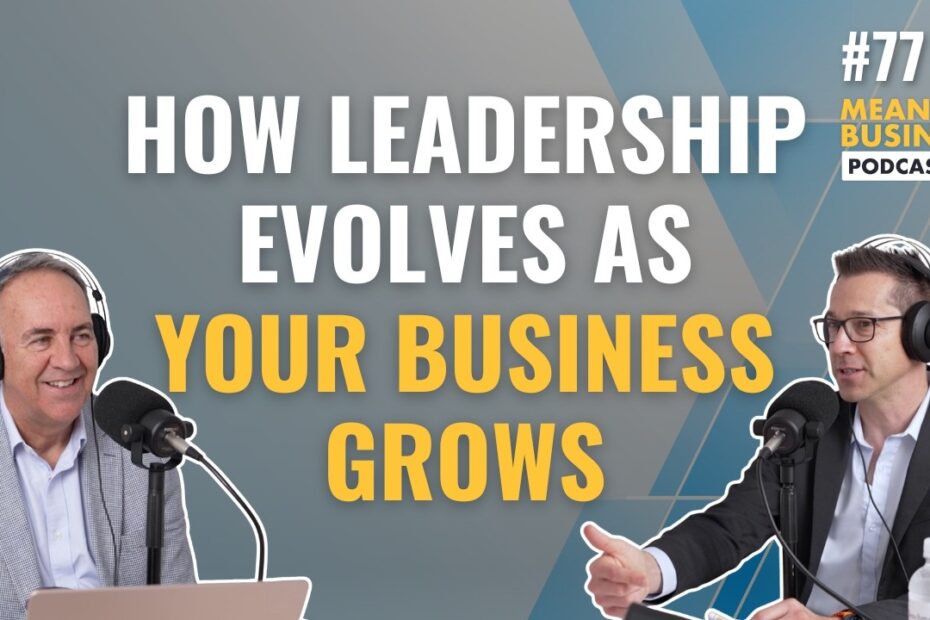
Same outcome. Opposite methods. Both, in one host’s experience, the most successful owners he knows personally. In episode 77 of the Meaning Business Podcast, How Leadership Evolves As Your Business Grows, Peter and Bruce use that contrast to open one of the most useful conversations a business owner can have: what kind of leader are you, and is it the kind your business actually needs right now?
Two Opposite Owners, and No Single Right Answer
There is no correct leadership style. There is only the one that works for you, your team, and the stage your business is at.
The billionaire example is not a one-off. Look at the household names and you find the same split. Warren Buffett, whose approach is laid out in the book The Snowball, is all about building teams and strong leaders, buying businesses that already have them, and then letting those leaders run. Once a year he reads the management report, ticks it off, and tells them to keep doing what they are doing. Steve Jobs was the opposite: intensely hands-on, the kind of boss few people would have found easy to work for. Elon Musk is cut from the same cloth. Part of why he succeeds is that he goes deep. He taught himself rocket engineering in the early days of SpaceX, and when the Tesla Model 3 was being built he reportedly set up a glass room in the middle of the factory so he could obsess over every car, 24/7. Buffett would never do that. Neither approach is wrong. Both work for those individuals.
So the question is not “which style is correct?” It is “which style fits my situation, and am I honest about that?”
Do You Own a Business, or Just a Job?
Here is the line that should stop every owner in their tracks. If your business relies on you micromanaging every component of it, it is very hard to sell, and you do not really have a business. You have a job.
But there is an important distinction the hosts drew, because “hands-on” means two very different things. The first kind is doing the doing: driving the trucks, making the widgets, personally handling the work. If that is tied to you, and especially if it is tied to you with customers, you have a real problem. The second kind of hands-on is almost a form of hands-off. Management runs the day to day, but you stay completely across what is happening. You know your numbers. You know the moving parts, because you care enough to, and because being close to the detail is part of who you are. You are just not the one doing the doing.
That second version is the goal for most owners, and it is also what makes a business worth something. A company that can run without you is a company you can eventually build real value into and sell. A company that cannot is a job with a lot of overheads.
Why Your Leadership Style Has to Change Over Time
You cannot stay in one static leadership position for the life of a business. As it grows, your role has to change, and that means deliberately changing how you lead.
Richard Branson is the textbook version. He started out doing everything himself, then built teams and leaders of teams, then managed those leaders, then repeated that pattern across Virgin Music, Gyms, Airlines, Trains and Cruises. Some ventures worked, some did not, but the transition from hands-on founder to hands-off owner is what let him replicate at all.
The trap is letting go too fast. The episode gave two real client examples that show both directions. In the first, a set of hands-on partners in a successful business put in a management layer and stepped back, but they lifted their focus off too quickly and too far, and the management layer did not work out. The result was massive staff turnover. They have since fixed it, but only by becoming more hands-on again, because they realised that for the stage their business is at, they cannot be hands-off yet. You cannot simply drop a manager in and walk away. In the second, an owner who was so hands-on she was burning out in every direction spent several years putting the right managers in place, and has genuinely become a hands-off operator whose businesses now hum along without her.
The lesson sits in the gap between those two. Going hands-off works only when two things are true: you have selected the right people who can actually do the job and be trusted, and you have clearly articulated the goal so they know what they are aiming at. Get the right person but leave them guessing on the direction, and it still falls apart. And whichever way you go has to suit both the life cycle of the business and the persona of the owner.
The Chameleon: Why the Best Leaders Don’t Have a Fixed Style
If there is one idea to take from this episode, it is this: a true leader is a chameleon. Leadership style should not be fixed. It is dictated by the situation and by the decision that needs to be made.
In practice that plays out across a spectrum. At one end is the directive call, where you simply make a strategic decision without going to the team, because that is what the moment requires. In the middle sits a pragmatic, consultative style: you run a round-table session, put the problem to your people, and either conclude they are right and change course, or blend their feedback into your own thinking and move forward together. At the far end is the laissez-faire style, the Warren Buffett “off you go” approach, where you hand someone a division and let them run it. The strongman, dictatorial style that some world leaders are known for is just one fixed point on that spectrum. The hosts deliberately declined to judge whether that style makes for good leadership, noting only that it is a recognisable style, not the whole of leadership.
The point is that a good leader can move along the whole range as the situation demands, rather than being stuck on one setting. Football makes it obvious. If a coach commits to a strategy and one or two senior players, say the captain, refuse to take it on board, you will never get cohesion on the pitch. The same fracture happens in a business when the leader and the team are not on the same page. Belief in the direction, shared by the whole organisation, is what turns a group of individuals into a team.
Leadership Under Pressure: Make the Call
Nothing exposes leadership like a genuine crisis, and nothing signals weak leadership faster than the inability to make a decision.
The episode’s best illustration came from an adventure race. Around 7am, lost, having already backtracked, the team faced two choices: push on down a brutally difficult path for the glory finish, or take the conservative route that guaranteed they would finish but miss key checkpoints. One host put his foot down and chose the conservative option, and he made that call for the team. Not because glory did not appeal, but because the facts were stacked against the risky path. They were nearly out of water with hours still to go, out of food, tired, and in an area with no phone reception. He knew that when people are hungry, thirsty and sleep-deprived, that is exactly when bad decisions and mistakes happen. It simply was not worth the risk. They backtracked, got out, and he has never regretted it.
Two principles come out of that. First, a leader has to be selfless, listen to others and read the psychology of the group, but ultimately make the call, because everyone needs a decision to buy into. Making a decision, right or wrong, beats floundering, and nobody knows at the time which it will be. The business version is the same. One host recalled selling a property just before Covid, taking a modest profit, only to watch it later be worth double. No regret, because as he put it, you would rather sell too early than too late, and no one goes broke taking a profit. You cannot change the past, but you can learn from it and lead better next time. It is neither fair nor useful to judge a decision in hindsight and call it wrong.
Second, the strongest leaders lead with questions, not commands. The hosts pointed to the story of how a famous television show got started, where the media boss never announced what would happen. He just asked blunt, pointed, sometimes harsh questions of everyone he dealt with. That is the model. Stuck in that adventure race, the sharpest question is not “what should we do?” It is “if we go this way, here is the downside, what do you think?” and “if we go that way, here is the upside, what do you think?” Base it on facts, not emotions or who is right, lay out the options, and then decide.
The Traits That Flow Down From the Top
The hosts boiled good leadership down to three traits. A good leader does not think they know everything. A good leader is selfless, a giver rather than a taker, doing what is best for the team, the shareholders, the staff and the customers rather than themselves. And a good leader has experience and has learned from their mistakes.
The catch with experience is that it can curdle into arrogance, which the hosts noted is a common trap as people get older: assuming that because something worked in the past, it will work now. But the playing field changes. Technology moves, conditions shift, and the strongest leaders keep developing, keep experimenting, and keep throwing the dice rather than coasting on what they already know. Comfort leads to stagnation, and stagnation leads to falling apart. There is a further layer too. Once you have the experience, the real job becomes mentoring rather than managing: coaching your managers to become stronger leaders themselves, which is the only way one person can effectively sit across twenty different companies.
All of this matters because of a single finding that ran through the whole conversation, and through the host’s own research into how much a business owner shapes their organisation. The owner is the culture. Your energy, your mindset, your belief in yourself and your team, and your commitment to developing yourself all flow straight down into the business. Bring shitty, low energy day after day, and that is what your team and your business become. Bring belief and growth, and the team buys into you and the vision. What you do as the owner literally dictates what happens in your business.
So the honest question to finish on is the one the hosts put to every listener. What kind of leader are you? Do you need to move from hands-on to hands-off, or back the other way? Do you need to listen better, or be less selfish? Because if you are willing to put the time into developing yourself as a leader, your business will get better almost by nature. You will attract better people, unlock the people you already have, and have a more successful and more enjoyable journey along the way.
Key Takeaways for Business Owners
- There is no single right leadership style. Hands-on and hands-off can both build hugely successful businesses. What matters is fit, not fashion.
- If the business needs you in every detail, you own a job, not a business. That version is exhausting to run and very hard to sell.
- There are two kinds of hands-on. Doing the doing is a trap. Staying across the numbers while management runs the day to day is exactly where you want to be.
- Your style has to change as the business grows. Going hands-off works only when you have the right people and you have made the goal crystal clear.
- Lead like a chameleon. Match your style to the situation, from a directive call to a round-table to a full “off you go.”
- Make the decision. In a crisis, a clear call based on facts beats floundering. Nobody knows at the time whether it is right, and you learn either way.
- The owner is the culture. Your energy, belief and willingness to keep developing flow straight down into the team.
Frequently Asked Questions
How do I know when to step back and become a more hands-off owner?
Step back only when you have the right people in place who can genuinely do the job and be trusted, and when you have clearly communicated the goals so they know what they are working towards. In the episode, owners who went hands-off too fast, without a solid management layer, ended up with massive staff turnover and had to become hands-on again. The transition has to suit the life cycle of the business.
Is hands-on or hands-off leadership better for a business owner?
Neither is universally better. The episode gives examples of billionaires who succeed at both extremes, from Warren Buffett’s hands-off approach to Elon Musk’s intensely hands-on one. The right choice depends on your business, your team, the stage the business is at, and your own persona. The best leaders adapt their style rather than sticking to one setting.
Why does it matter if my business depends on me?
Because a business that relies on you micromanaging every part of it is very hard to sell, and arguably is not a business at all but a job. Building a company that can run without you in the day to day is what creates something valuable and sellable.
What is the difference between managing and leading?
Managing is more directive: giving clear instructions from a position of authority, with defined tasks and deadlines. Leading is more about setting the direction, helping people understand and believe in the goal, and giving them room to work within boundaries and come back to you. Good leaders know when each is appropriate, and they move between them.
What makes someone a good leader under pressure?
The ability to make a decision. The episode’s view is that making a clear call, right or wrong, based on facts rather than emotion, always beats being unable to decide. A good leader is selfless, listens to the group and asks sharp questions about the upside and downside of each option, but ultimately makes the call everyone can get behind.
How much does the business owner really affect the culture?
Enormously. The research discussed in the episode points to the owner effectively being the culture. Your energy, mindset, belief in yourself and your team, and commitment to your own development all flow down through the business. What you bring as the owner is largely what your team and your business become.
If this resonated, watch the full episode, then ask yourself one honest question: am I leading the way my business needs right now, or just the way I always have?
The best leaders are not defined by a single style. They are hands-on when the moment demands it, hands-off when their people have earned it, and honest enough to tell the difference. Get that right, and you stop running a job and start owning a business.
Topics: hands-on vs hands-off leadership | leadership styles | owning a business vs a job | delegation | transitioning out of your business | situational leadership | decision making under pressure | mentoring your team | business culture | leadership development | Benchmark Business Advisory | Meaning Business Podcast