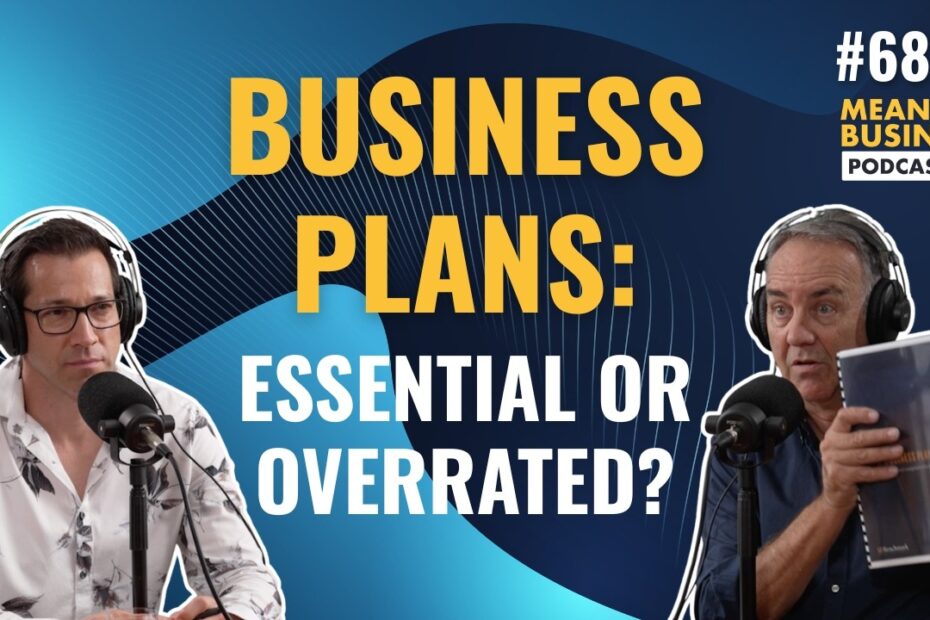
No, you do not need a business plan. Unless you want to be successful in business. Then you absolutely do. Here is why every SME owner needs one and how to make it actually work.
It is 1987. Interest rates in Australia are climbing. A young business owner in Wollongong, hocked to the eyeballs in debt, is running three or four service stations with a car wash that has high volume but low profitability, probably losing money some months. A good bloke he knows, Graeme Marks, comes to him and says straight, “Mate, you are over-servicing. You are going to lose money.”
He tells him to get out. He is wrong.
As things get deeper and deeper, that same owner realises he is in real trouble and sits down to do something he has never done before. He writes a business plan. It does not save the business and he is clear it was not the solution, but it gives him direction. What it does do is show him exactly where the money is leaking. He was running 3,000 car washes a month at two dollars a pop, bringing in six thousand dollars. His costs on wages, power, soap and everything else were higher than that. He
was spending more than he was making.
That young owner was Bruce Coudrey, now co-host of the Meaning Business Podcast. In this episode, Bruce and Peter Spinda tackle one of the most common questions SME owners ask: do I really need a business plan?
The short answer? No. You do not need one. Unless you want to be successful. Then you absolutely do.
Do You Need a Business Plan? The Honest Answer
No, you do not technically need a business plan. You also do not need to grow profit, retain great staff, or know which direction your business is heading. None of it is mandatory. Plenty of business owners skip all of it and stay busy doing exactly what they have always done.
But if you want to win, build something valuable, and stop running on pure instinct, you need a plan. A business plan tells you three things: where you are, where you are going, and how you intend to get there. That is the whole job.
It is not a finance document. It is not a wish list, an HR org chart, or a glossy PDF for the bank. When Bruce wrote his first plan back in 1987, he was not using a template. He simply wrote down what he was making, what he was spending, what he wanted, and what he was going to do about it. That plan, in plain English, exposed the maths he had been ignoring. It also led to a change in fuel pricing, an idea from his business partner Alex that Bruce resisted for a long time before admitting Alex was
right: less fuel volume at a greater margin, more profit per litre.
What Happens When You Do Not Have a Business Plan?
Pete shared the story of a client BBA started working with late last year. Around 70 employees. Around 16 million in annual turnover. A successful business that grew from a one-man band into a serious operation.
They ran an organisation-wide survey. The same message came back from the bottom up. We have no idea where this business is going.
Read that again. Seventy people, every single day, turning up to work for a $16 million company, and not one of them could clearly say what good looked like in five years. When there is no plan, there is no shared direction. And when there is no direction, your team fills the silence with doubt.
Why Direction Matters More Than Money
There is a comfortable myth among business owners. The business is making money. Staff turn up. Things tick over. Everything must be fine.
It is not.
Employees, especially good ones, do not just want a salary. They want to know where they are heading. They want vision. They want growth. They want to know there is a future for them in your business.
Pete explained that this client had been losing strong people. Not to better pay. Not to bigger titles. To other companies that offered something different. A new challenge. Evolution.
When your team does the same thing for five or ten years with no clear future in front of them, the best people walk. The mediocre ones stay. That is a slow, expensive way to kill a business.
The Two-Page Snapshot That Changed Everything
One of the first things BBA built for that client was a business plan. The real breakthrough was not the full document. It was a short, two-page business plan snapshot written for the 70 employees.
That snapshot gave staff confidence that there was a future in the business. Confidence that they could grow and progress. Confidence that the leadership team actually knew where they were heading.
The plan also identified new areas the business could move into, and opportunities for staff who had been thinking of going elsewhere. The message to those people became: you do not need to leave, because this is where we are heading.
Why Do Most Business Owners Avoid Writing a Business Plan?
The owner in that example came out of the trades and is still quite hands-on in the work itself. The idea of writing a plan was not just unfamiliar. It was intimidating. Would the grammar be right? The structure? The spelling?
This is the wall most SME owners hit. They equate “business plan” with a 50-page formal document that needs to be perfect. It does not need to be.
A One-Page Plan Beats No Plan Every Time
Bruce mentioned a business broker he knew years ago named Shane Dingley. A sharp entrepreneur. Owned multiple businesses. Ran his entire operation off a one-page plan. Goals. How he would hit them. That was it. Worked great.
You can have a 70-page plan like Bruce. You can have a single page. You can have 30 pages. Length is irrelevant. What matters is that the plan is yours, it makes sense to you, and you actually use it.
How Do You Actually Use a Business Plan?
This is where most plans die. They get written, printed, filed, and forgotten. A real plan is something you sit down with regularly and use to ask hard questions of yourself. Bruce reviews his plan several times a year. He sits down. Alone. With a hard copy. No screen. No team. Just him and the plan.
He works through what is on track, what has fallen off, and what needs to change. A few hours, a few times a year. That discipline separates owners who write plans from owners who run on plans.
Why hard copy? Self-accountability. When it is just you and the page, there is nowhere to hide.
The Plan Is How You Work ON the Business
SME owners get trapped working IN the business. Customers. Crises. Day-to-day fires. The plan is the tool that pulls you out of that loop and forces you to think strategically.
Put one hour in the calendar with your plan open. That is working on the business.
“But Things Change. Why Bother Planning?”
This is the classic pushback. Why plan when reality keeps shifting?
The GST when it landed. September 11. The GFC. Whatever comes next. You cannot foresee any of it.
But that is exactly why you plan. The plan is not a prediction. It is a reference point. When everything goes sideways, you open the plan and ask: what did I set out to do? What is my contingency? How do I change course to still get there?
Without that reference point, you are just reacting. With it, you are recalibrating.
Supercharge Your Business Plan with a Personal Plan
This is where most plans miss the mark. They focus on the business and forget about the human running it. Bruce and Peter often ask clients who say they want to grow from 10 million to 20 million the same simple question: why?
What are you actually trying to do in life? What is the point of doubling the business? More freedom? More holidays? An exit in five years? A legacy you can be proud of? When you align your personal vision with your business plan, the whole game changes. You get the drive. The motivation. The
hunger to actually do the work.
A business plan without a personal plan is half a plan.
What Should Every Business Plan Include?
Bruce believes every business plan should have two non-negotiable components built into it:
- A marketing plan. How are you going to attract and retain customers?
- A succession plan. How do you eventually step out of the business with maximum value?
If you have those two embedded in your plan, you have covered a huge portion of the strategic work most business owners ignore. You know how you are going to grow. You know how you eventually exit.
You should also be very clear on the why. Bruce keeps his front and centre in his plan. When he reads it back, it reminds him why he is doing what he is doing. That kind of clarity gives you inner confidence when you talk to your team. You can say with conviction, “Here is what we are doing. Here is how we are going to do it.”
If a polished, structured exit is in your future, BBA’s Value Building and Sale Ready programmes are built around exactly this kind of planning discipline.
The Worst Thing You Can Do with a Business Plan
The worst mistake a business owner can make? Get someone else to write the plan for you without your input, then stick it in a drawer.
Submitting a plan to a landlord. To a franchisor. To a bank for a loan. To a business partner just to keep them happy. None of that counts as having a business plan.
You need to own it. You need to write it, or at minimum heavily co-create it. It needs to live in your head, not just on paper.
Templates are fine to start with. Working with an advisor to help shape it is fine. But the moment you outsource the thinking, you have a document. Not a plan.
Plan, Action, Calendar. Then Live It.
There is one more step Peter raised that most owners skip. Once the plan exists, take the actions out of it and put them into your calendar.
Plan. Action plan. Calendar. Then live it.
Every action gets a date. Every date gets a tick when it is done. By the end of the year, you look back at what you achieved and realise the plan was not theoretical. It was real.
Because if you write it down, and you actually do it, it will happen.
Key Takeaways for SME Owners
- You do not need a business plan, unless you want to succeed. Success is optional. The plan is the price of admission.
- A one-page plan beats no plan every time. Length is irrelevant. Use is everything.
- Your team needs direction more than they need a pay rise. Good people leave for evolution, not just income. A clear plan gives them a future to stay for.
- Review your plan regularly, by hand, alone. Bruce sits down with a hard copy several times a year. That discipline is what makes the plan work.
- A plan does not predict the future. It anchors you when things change. When the unexpected hits, the plan is your reference point.
- Align your business plan with a personal plan. Without the why, the business plan has no fuel.
- Own your plan, then live it through your calendar. Write it. Action it. Schedule it. Tick it off.
Frequently Asked Questions
Do you need a business plan to run a small business? No, you do not technically need a business plan to operate. But if you want to grow profit, retain good staff, and know where the business is heading, you need one. A plan gives you direction, accountability, and a reference point when conditions change.
How long should a business plan be? Length does not matter. A one-page plan that you actually use beats a 70-page plan that sits in a drawer. What matters is that the plan is yours, it makes sense to you, and you review it regularly.
What should a business plan include? At a minimum, a business plan should cover where you are now, where you are going, and how you will get there. Benchmark recommends embedding two components into every plan: a marketing plan and a succession plan. A clear statement of your why ties it together.
How often should you review a business plan? Review it several times a year, not just once. Sitting down with a hard copy on your own, a few hours at a time, keeps you accountable and pulls you out of the day-to-day to work on the business.
What is the biggest business plan mistake? Getting someone else to write it for you, then filing it away. A plan submitted to a bank, landlord or franchisor and never opened again is a document, not a plan. You have to own it.
A business plan is not a document. It is a decision. The decision to stop reacting, stop wandering, and start running your business with intent. You do not need permission, a perfect template, or 70 pages. You need a page, a pen, and the honesty to write down where you actually are and where you actually want to go. Then the discipline to live it.
Topics: business plan | do you need a business plan | SME business plan | small business plan Australia | one page business plan | how to write a business plan | strategic planning for SMEs | business plan review | working on the business | personal vision plan | succession planning | marketing plan | business plan benefits | business growth plan | Australian SME advisory |
Benchmark Business Advisory | Meaning Business Podcast
Do You Need a Business Plan? Why Smart SMEs Have One
No, you do not need a business plan. Unless you want to succeed. Here is why every SME owner needs one, and how to make it work.